As the title might suggest, today's post is about my job. Let's try to explain it in a way that everyone can understand, as I've struggled with that throughout my work life.
My first big job after college was at KPMG, one of the Big 4 consulting firms. Looking back, it was a great starting point. I would recommend such a step for anyone unsure about their career path and seeking a broader overview of the market. Consulting allows you to work on multiple projects simultaneously, which makes life more interesting, while introducing you to various industries like banking and finance, energy, or telecommunications. This role also teaches new hires a lot every day. I was fortunate to have two excellent managers overseeing my projects who taught me a great deal and gradually increased my responsibilities.
Well, that probably didn't give you much insight, right? So, let's dive into the details of one project. I was part of a team that analyzed internal processes (such as HR, documentation management, and more), mapped them on paper to clarify them, and then optimized them. This means that when the changes are implemented and the process is performed in the future, it will save employees' time, for example.
I then moved to another consulting firm (Deloitte) and another one (Trask). I only had to interview once because I went on recommendation with specific people who accompanied me (just a short interview for Deloitte—although I had other interviews after college, those were before my first job, so they don't count). I must say, it's much easier to change jobs through recommendations than the standard procedure of sending CVs and attending interviews.
And I ended up in a major bank in my country. I continue working with processes. I tried UX design but ended up as a CX analyst. Long story short, CX stands for Customer Experience. I am responsible for internal CX, which involves employee satisfaction with our projects. Today's focus was more on history, and CX deserves its own post, so expect more explanation next time.
The educational part of today's post will be about processes, as we discussed them earlier, and it might help you understand my job better.
So, what is a process? How does it look?
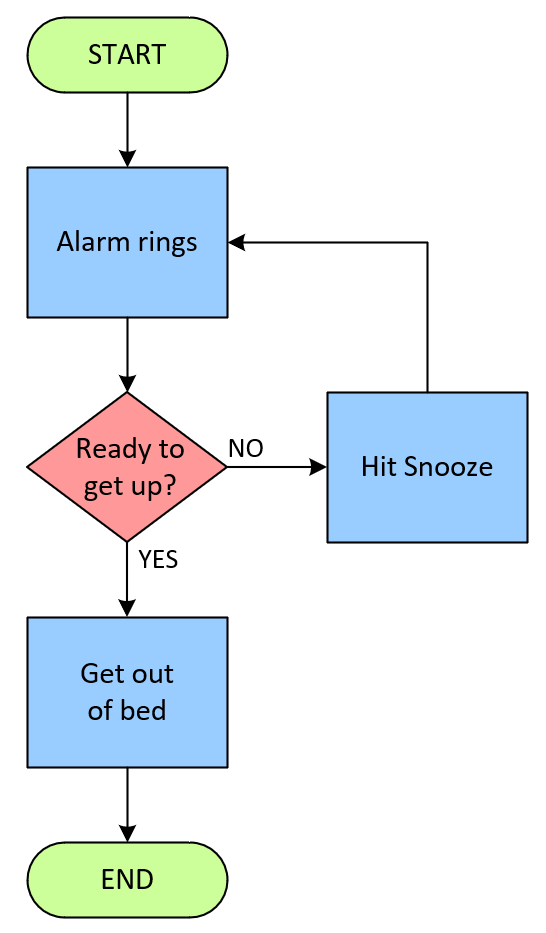
A process is a series of steps or actions taken to achieve a specific outcome. It's like a recipe for getting things done in an organization. Here's a simple breakdown:
-
Start: Every process has a beginning point.
-
Steps: These are the actions or tasks that need to be completed.
-
Decision points: Sometimes, processes involve choices that determine the next step.
-
Flow: This shows how one step leads to another.
-
End: The final result or output of the process.
Processes can be visualized using flowcharts or diagrams, making them easier to understand and improve. In my work, we analyze these processes to find ways to make them more efficient, saving time and resources for the company.
A simple process might look like this:
Next time, I'll delve deeper into Customer Experience (CX) and how it relates to my current role in the bank. Stay tuned!
Comments
Post a Comment